
Follow a real enquiry
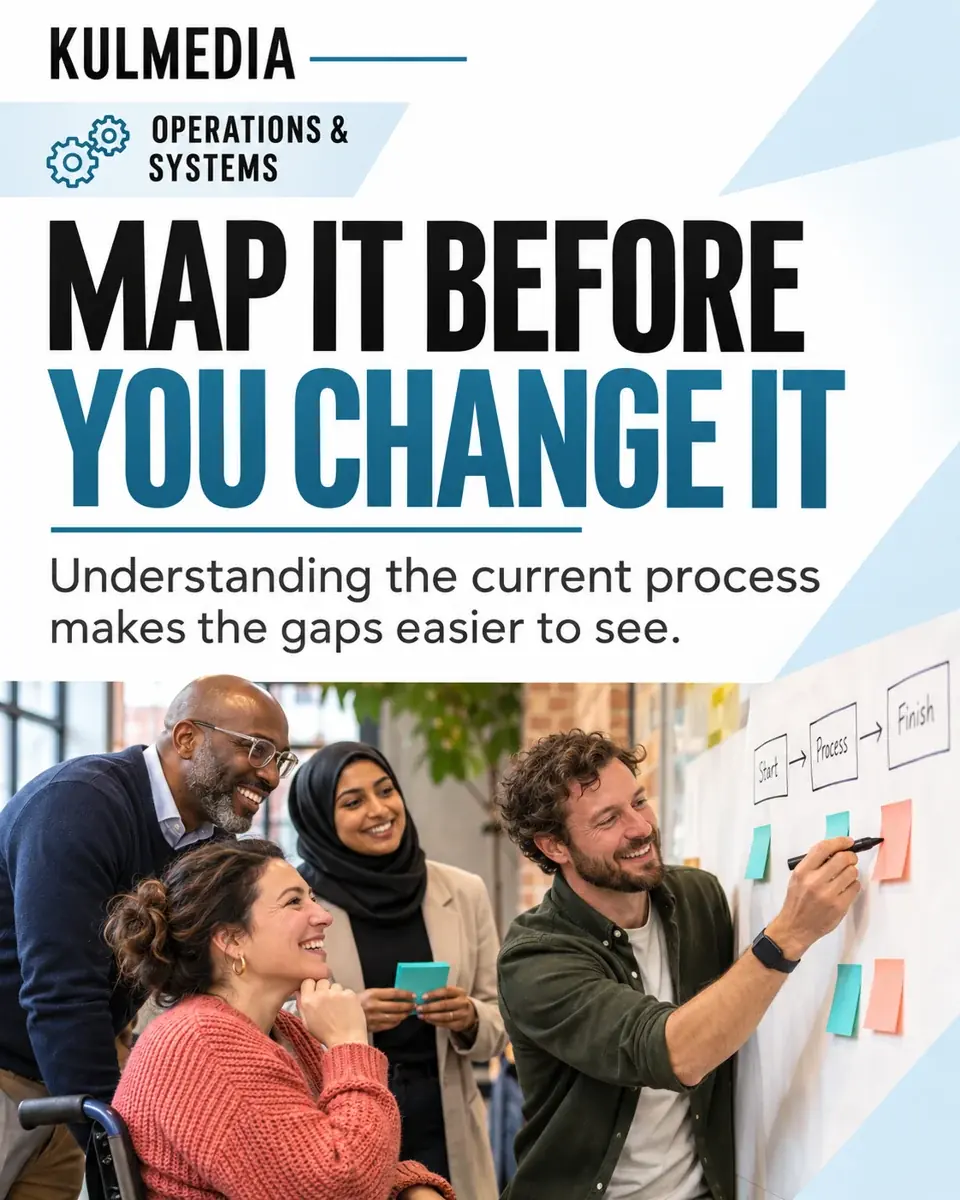
Choose a recent enquiry and trace what happened from the first message to the next agreed step. Where did it arrive? Who saw it? Where were the details recorded? Who replied? Write down the actual route, including the workarounds. A process map is useful when it reflects reality rather than how everyone hopes the system works.
Include the points where information changes hands. An enquiry might move from a website form to an inbox, then into a spreadsheet and finally to the person preparing a quote. Look for repeated typing, missing details and tasks that rely on someone remembering.
Make ownership clear
Give each stage an owner and define what a completed handover looks like. That may mean a recorded brief, a confirmed appointment or a note that the customer is waiting for an answer. The person receiving the work should not have to reconstruct the conversation from several places.
Agree where the current information lives. A shared view is only helpful if people know which record to update. Keep the process proportionate to the business. A small team may need a well-managed shared system before it needs a complex new platform.
Improve the process before automating it
Remove unnecessary steps and clarify the confusing ones first. Then identify routine tasks that could be supported by automation, such as an acknowledgement or an internal reminder. Decide what should happen if information is missing or the automation fails. Someone still needs responsibility for checking the outcome.
AI can help with tasks such as organising an enquiry brief or drafting a first response, where appropriate. A person should review information that affects a quote, commitment or customer relationship. Use approved tools and avoid putting confidential customer information into a service without checking how that information is handled.
Try one change and review it
Start with one improvement you can observe. For example, record an owner and next action for every new enquiry. Review whether fewer items are left waiting and whether the team can see what needs attention. Compare the result with the previous way of working before expanding the system.
Kulmedia's operations work focuses on the practical connection between enquiries, delivery and the systems behind them. The aim is to reduce repeated effort and make responsibilities clearer. A process that the team understands is a stronger starting point than another tool nobody has time to maintain.
Talk through your priorities with Kamal via Google Meet or Zoom. No obligation.