
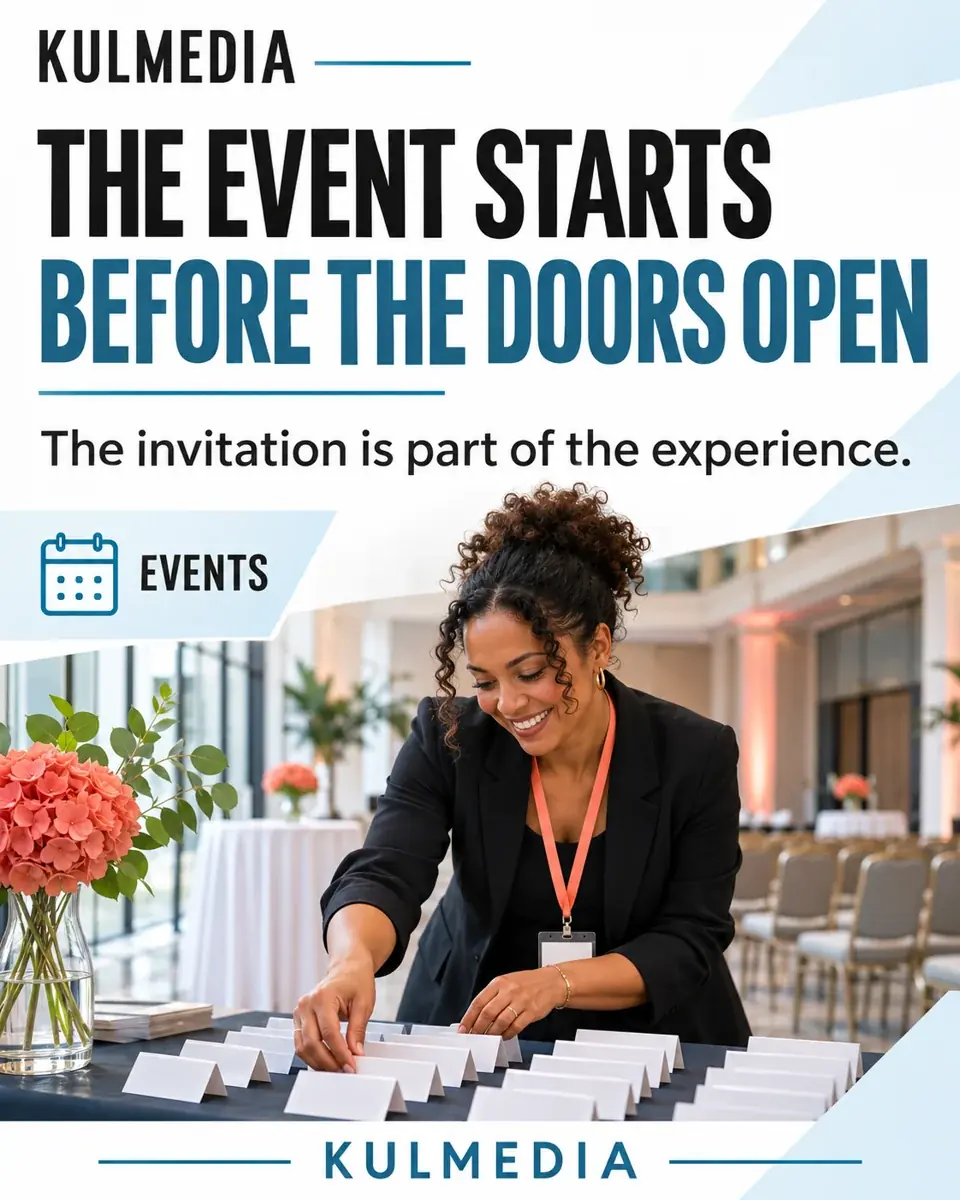
Before: make the invitation useful
Tell people who the event is for, what they can expect and how to take part. Include the practical information that makes attendance easier: the date, location, timings and how registration works. Introduce speakers or topics with enough context to explain why they matter to the intended audience.
Build a short sequence rather than repeating the same poster. One post can explain the purpose, another can introduce a discussion and a later update can answer a common question. Keep availability and booking information accurate. Do not use artificial urgency or imply an event is nearly full without evidence.
During: capture the experience thoughtfully
Agree a small capture list before the day. Useful material could include arrival, the setting, a speaker's key point and moments that show how people take part. Give someone responsibility for collecting it so the team running the event is not trying to do everything at once.
Check permissions and explain how photography and filming will be used. Respect anyone who does not want to appear. Avoid publishing private conversations or attendee details. Short, clear clips and a few strong photographs are often more useful than an unstructured folder of everything that happened.
After: share something worth returning to
A thank-you post is a start. Follow it with a useful takeaway, an approved speaker extract or a short explanation of a topic that raised questions. Give the content enough context for people who were not in the room. Link to further information where it genuinely helps.
Kamal supported Mark Burrows and the MING Network team with event and marketing activity in February 2026. He also helped the team behind Kerry Mountjoy's The Mindset Recode build awareness and supported the event days in January 2026. These are examples of involvement across promotion and delivery, rather than claims about attendance or commercial results.
Use feedback to improve the next event
Ask what attendees found useful and what could have been clearer. Review the registration journey, questions raised before the event and practical issues on the day. Bring the findings into the next brief rather than treating feedback as a separate report.
Agree the content deliverables and follow-up responsibilities in advance. A well-planned event campaign connects the invitation to the experience and gives the team useful material afterwards. Kulmedia's events support brings those parts together around the scope of the event.
Talk through your priorities with Kamal via Google Meet or Zoom. No obligation.